

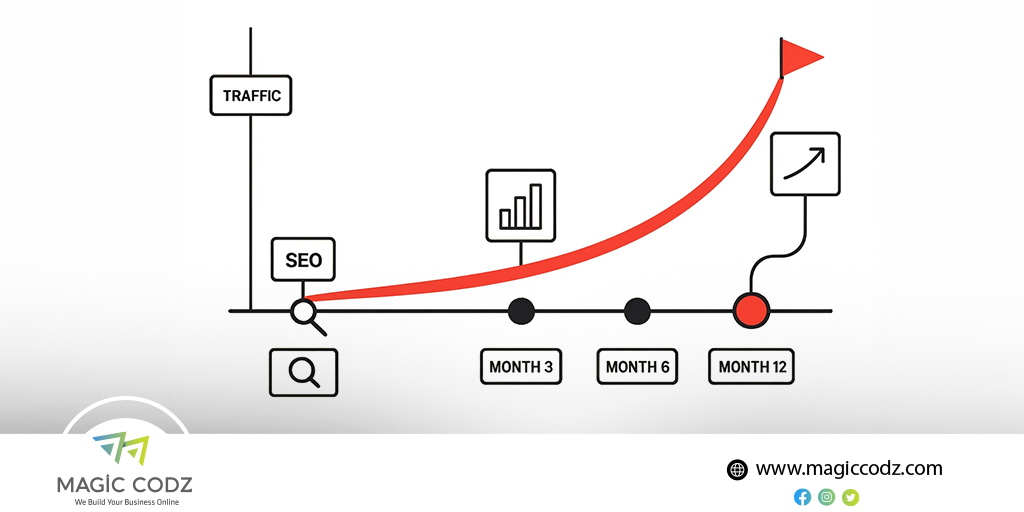
Launching a new website is an important step for any business, but getting it visible on Google takes time. SEO helps a website build search visibility, attract relevant visitors, and improve its position in search results. However, the timeline can vary depending on the website, competition, content quality, and the consistency of SEO efforts.
For businesses starting SEO for a new website, understanding the factors that influence progress can help set realistic expectations.
How Long Does SEO Take for a New Website?
There is no fixed timeline for SEO. A new website may start showing early improvements within a few months, while stronger and more consistent rankings can take longer. Competitive keywords usually require more time and effort than less competitive search terms.
The initial stage generally focuses on building a strong technical foundation, creating useful content, and helping search engines understand the website.
Key Factors That Affect SEO Progress
Several factors can influence how quickly a new website gains search visibility:
- Website structure: A clear and well-organized website makes it easier for search engines to crawl and understand pages.
- Content quality: Helpful, relevant, and original content can support better search visibility.
- Keyword competition: Highly competitive keywords generally take longer to rank for.
- Technical SEO: Page speed, mobile usability, indexing, and website security can affect performance.
- Backlinks: Relevant and trustworthy backlinks can help build website authority.
- Local SEO: Businesses targeting a specific location may benefit from optimized local listings and location-based content.
- Consistency: Regular content improvements and ongoing optimization are important for long-term SEO growth.
| SEO Stage | Main Focus | Possible Progress |
|---|---|---|
| First 1–3 months | Technical setup, indexing, keyword research, initial content | Search engines begin discovering and understanding the website |
| 3–6 months | Content growth, on-page SEO, internal linking, authority building | Early ranking and traffic improvements may appear |
| 6–12 months | Content expansion, optimization, backlinks, local SEO | More keywords may gain visibility and rankings |
| 12+ months | Continuous optimization and content development | Stronger and more consistent organic growth can develop |
These timeframes are general. SEO performance depends on the website's industry, competition, existing authority, content, and overall strategy.
How to Improve SEO for a New Website
A new website can build a stronger foundation by focusing on the following:
- Research keywords based on actual search intent.
- Create useful content around relevant topics.
- Optimize page titles and meta descriptions.
- Use clear headings and logical page structures.
- Improve website loading speed.
- Make the website mobile-friendly.
- Build relevant internal links.
- Optimize images and other media.
- Fix broken links and technical issues.
- Monitor indexing through Google Search Console.
- Build relevant and natural backlinks.
- Update older content when necessary.
How Long to Rank on Google?
Many businesses ask how long to rank on Google after launching a new website. The answer depends largely on the competitiveness of the target keywords and the strength of the website.
Long-tail and less competitive keywords may begin gaining visibility sooner. More competitive keywords can require a longer period of consistent content creation, technical improvements, authority building, and optimization.
Instead of focusing only on rankings, businesses should also monitor:
- Organic website traffic
- Keyword visibility
- Search impressions
- Click-through rates
- Indexed pages
- Organic leads and inquiries
- Engagement with landing pages
Building Long-Term SEO Growth
SEO is an ongoing process rather than a one-time activity. Search trends, competitors, algorithms, and customer behaviour can change over time. A successful strategy therefore requires regular monitoring and improvement.
For businesses investing in SEO for a new website, the focus should be on creating a technically sound website, publishing useful content, targeting relevant keywords, and steadily building authority.
Understanding how long to rank on Google can help businesses set realistic expectations and measure progress based on meaningful SEO indicators rather than expecting immediate results.
the best quality
of our PRODUCTS
Make an Enquiry with your complete requirement for a best Quote !