


Frequently, your company's website serves as the initial point of contact for prospective clients. Over time, websites can face issues like slow loading speeds, outdated content, broken links, and security vulnerabilities. This is why website audits are essential for maintaining website performance and ensuring your site continues to achieve your business goals. Regular website audits are more than routine checks—they are a strategic tool to monitor and enhance website performance while keeping your online presence secure, user-friendly, and up-to-date.
Identify and Fix Technical issues.
A key benefit of a website audit is identifying technical issues that may affect website performance, such as:
- Broken links and 404 errors
- Server issues or downtime
- Slow page load times
- Mobile responsiveness problems
Technical Audit Checklist
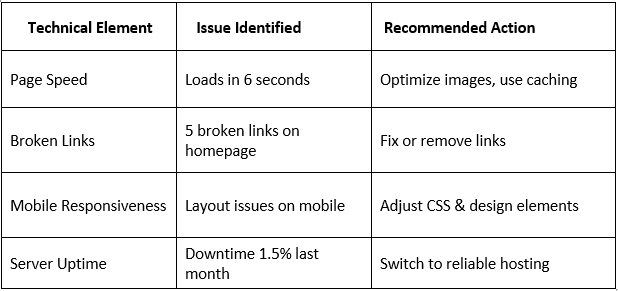
Fixing these issues ensures your site runs smoothly, improves credibility, and reduces bounce rates, ultimately boosting overall website performance.
Enhance User Experience (UX)
A well-conducted website audit helps identify areas that negatively impact user experience, such as confusing navigation, slow-loading pages, or ineffective calls-to-action (CTAs).
Improving these elements during your audit enhances website performance by making it easier for visitors to find information, complete actions, and return to your website.
Boost SEO Performance
Website audits also focus on search engine optimization (SEO). By analysing meta tags, headings, keyword usage, internal linking, and content quality, audits help enhance your site’s visibility and search rankings.
Strong SEO practices directly improve website performance, attract more organic traffic, and increase conversions.
Evaluate Content Quality and Relevance
Outdated or irrelevant content can harm website performance and reduce user engagement. A website audit ensures all content is accurate, up-to-date, and valuable to your audience, helping to maintain a strong online presence.
Ensure Security and Compliance
Website security is critical for performance and trust. A website audit checks SSL certificates, malware protection, secure payment gateways, and compliance with privacy laws. Maintaining these standards improves your website performance by ensuring smooth functionality and building visitor trust.
Monitor Performance Metrics
Audits provide insights into key metrics like page speed, bounce rates, conversion rates, and traffic patterns. This data helps identify areas for improvement, enhancing overall website performance.
Stay Ahead of Technology and Design Trends
A comprehensive website audit helps you incorporate modern features like mobile-first design, AI-powered chatbots, and interactive content, ensuring your site remains current and competitive.
Cost-Effective Maintenance
Regular website audits prevent costly issues down the line, such as security breaches or major redesigns, saving time and money and maintaining optimal website performance.
A website audit is not just a routine check—it is a strategic tool for improving website performance, enhancing user experience, boosting SEO, ensuring security, and supporting effective web optimization . By integrating regular website audits into your digital strategy, you can ensure your website remains fast, secure, user-friendly, and a strong driver of business growth.
the best quality
of our PRODUCTS
Make an Enquiry with your complete requirement for a best Quote !