Oracle® for
Cats and Dogs
Shop Now
Cats and Dogs
If your cat or dog has diabetes, monitoring blood glucose and ketone levels is essential for preventing serious complications. Regular testing helps ensure your pet’s blood sugar stays within a safe range, reducing the risk of both hypoglycemia and hyperglycemia.
With routine testing, pet owners and veterinarians can make informed decisions about treatment, ensuring better health, comfort, and quality of life for our furry family members.
"With Oracle® for Cats and Dogs you can now test in the convenience of your own home."
— Pet Diabetes Checklist | Zoetis PetcareTest comfortably in your own environment.
Make better decisions about insulin and diet.
Reduce risks of hypoglycemia & hyperglycemia.
Better health and comfort for furry family members.
When there isn’t enough insulin for cells to use glucose properly, glucose levels rise. Ketones are chemicals produced when the liver breaks down fat for energy instead of using glucose.
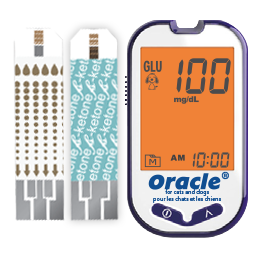
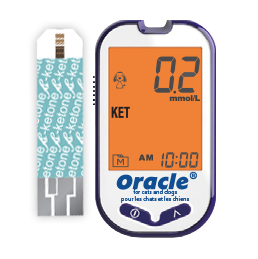
If your dog or cat starts to produce ketones it means there is a dangerous condition called diabetic ketoacidosis (DKA), a medical emergency requiring immediate treatment. Testing for ketones helps detect this early, so steps can be taken before it becomes life-threatening.
If your dog or cat is producing ketones they need to be seen by a veterinarian immediately.
They usually require intravenous fluids and insulin.
Many pet owners check blood glucose once or twice a day, often before insulin injections or meals.
Your veterinarian may recommend glucose curves (testing every 1–2 hours over a day) to assess how well insulin is working.
Test more frequently if your pet seems unusually tired, drinks or urinates more, or eats less than usual.
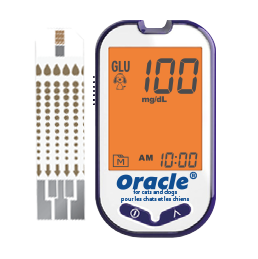
Testing your cat’s or dog’s blood glucose at home is simple once you and your pet are comfortable. Use Oracle® for Cats and Dogs for accuracy.
Keep a log of your pet’s readings to share with your veterinarian.
Diabetes mellitus occurs in about 0.2% – 1.0% of cats and dogs.
Body cannot produce insulin. Dogs almost always have Type 1.
Insulin-resistance. Body needs higher levels. More common in overweight pets.
See your veterinarian if you notice these symptoms.
Can progress to a rapidly life-threatening condition known as diabetic ketoacidosis (DKA), which requires hospitalization and aggressive fluid therapy.
Blood and urine tests are used to diagnose (checking sugar and ketones). Treatment includes: Insulin, Oral hypoglycemic agents, Diet, Activity.



🔥
| Size | Bust | Waist | Low Hip |
|---|---|---|---|
| XS | 32 | 24-25 | 33-34 |
| S | 34-35 | 26-27 | 35-36 |
| M | 36-37 | 28-29 | 38-40 |
| L | 38-39 | 30-31 | 42-44 |
| XL | 40-41 | 32-33 | 45-47 |
| 2XL | 42-43 | 34-35 | 48-50 |